# How to Read Perfume Notes Without Treating Them as a Formula
Perfume notes are a useful map of a fragrance, not a laboratory disclosure. Learn what top, heart and base notes can tell you — and what they cannot.
Canonical: https://massoedition.com/journal/how-to-read-perfume-notes/
Author: MASSO Editors
Format: Guide
Published: 2026-11-20T00:00:00.000Z
Updated: 2026-11-20T00:00:00.000Z
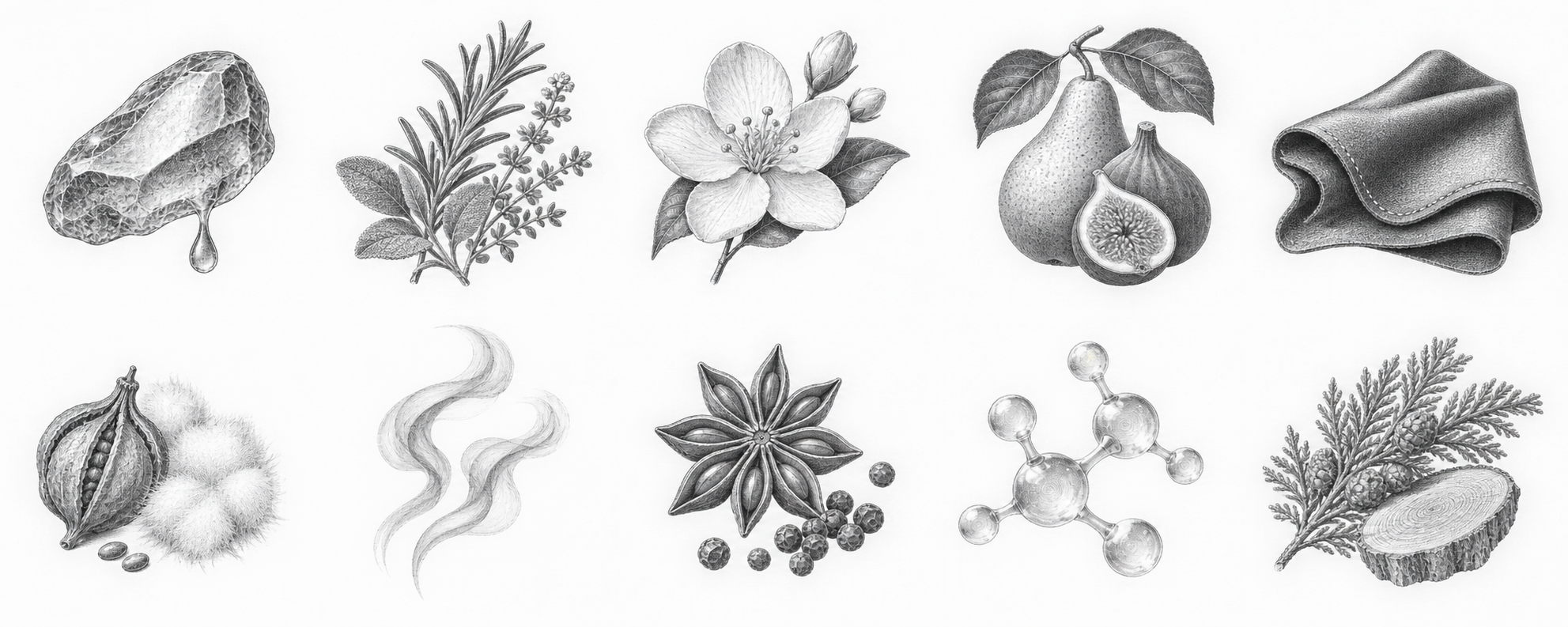
MASSO Edition illustration of familiar scent families and materials. Image provenance: editorial.
## At a glance
- A note list is: A house’s map of a fragrance’s character
- A note list is not: A complete formula or a guarantee of how a scent will wear
- Best use: Turn notes into hypotheses, then test on skin
A perfume note list can be one of the best ways into a fragrance — provided you do not mistake it for the fragrance itself.
“Fig leaf, cedar, musk.” “Saffron, jasmine, amberwood.” “Cardamom, oud, tonka.” These names give you a direction. They can tell you whether a scent is likely to lean green, floral, dry, creamy, mineral, smoky or sweet. They cannot tell you exactly what you will smell on your skin, in your climate, on that particular day.
Think of notes as a map made by the house: specific enough to orient you, selective enough to leave room for the experience.
## What a perfume note actually is
In fragrance writing, a “note” can be a recognisable material, an accord built from several materials, or an image used to communicate a sensation. A brand may name cedar because cedar is part of the olfactory idea; it may name “clean skin,” “rain” or “cashmere” because those words convey a texture or mood.
The published notes are not the same thing as a complete formula. Fragrance formulas are commercially confidential, while the real palette behind a finished scent is far wider than the short poetry printed on a product page. IFRA’s Transparency List alone describes thousands of fragrance and functional ingredients used across consumer products. Its explanation of formula disclosure also notes why a label may use the legal shorthand “fragrance” or “parfum” rather than list every component: the formula is intellectual property, with required allergen and safety information handled separately.
That is not a reason to distrust notes. It is a reason to use them for the job they can actually do: helping you decide what to smell next.
## Top, heart and base: a useful story, not a stopwatch
Many houses divide notes into three stages.
- **Top notes** are the opening impression: often the first brightness, lift or contrast.
- **Heart notes** describe the central character that becomes clearer as the opening settles.
- **Base notes** point toward the materials or accords that give a composition body, texture or a lasting frame.
This pyramid is an elegant way to explain development, but it is not a laboratory timeline. A “base” note can be perceptible from the first spray; a citrus note can reappear later; an accord may be felt as one continuous cloud rather than three neat acts. Some houses do not use a pyramid at all and publish one ungrouped list instead.
For example, the Tom Ford Oud Wood page names cardamom, pink pepper, patchouli, amber, oud and tonka without requiring you to read them as a fixed sequence. The Maison Francis Kurkdjian Baccarat Rouge 540 description similarly uses a short set of materials to explain a larger effect. Both lists are invitations to smell, not a promise that every person will detect every word in the same order.
## How to turn notes into better questions
Instead of trying to predict the entire perfume from one material, use the note list to make three small hypotheses.
First, look for the note you already know. If you like cardamom but dislike a syrupy cherry effect, that gives you a reason to test an opening carefully rather than a reason to dismiss the fragrance. Second, identify the anchor: woods, resins, musks, vanilla, moss or a mineral accord often tell you more about the eventual texture than the first listed fruit. Third, notice the contrast. Fig plus cedar suggests a different direction from fig plus coconut; rose plus incense is different from rose plus pear.
The point is not to assemble a scent in your head with perfect accuracy. It is to know what to pay attention to when you encounter it.
## Notes describe a relationship, not only ingredients
The same word can mean different things in different perfumes. Vanilla may feel dry and woody, creamy and edible, smoky, salty or almost invisible. A rose may read like petals, jam, tea, lipstick or pepper. Oud can be medicinal, leathery, polished, animalic or simply a deepened wood effect.
That is why phrases such as “I hate vanilla” or “I only wear woody scents” are useful beginnings, not final rules. Look for the companions around a note. They describe the relationship you are actually responding to.
## How to test what the pyramid cannot tell you
Use a blotter for a first edit, then skin for the real question. Write down the first thing you notice, the moment the scent feels most itself and what remains once you have stopped actively searching for it. You do not need to name every material correctly. “Cool, dry wood with a sweet powder edge” is a more valuable observation than forcing yourself to find a note you were told should be there.
If you are comparing two scents, choose one shared note and one point of difference. Compare two fig perfumes by their leaf, milk, bark or fruit impression; compare two amber scents by their resin, sweetness, salt or wood. This is how a note list becomes a personal vocabulary rather than a quiz.
## The only rule worth keeping
Read notes closely, but believe your own nose. A house’s list gives context. Your experience decides whether the composition becomes something you want to wear, remember or return to.
For a practical next step, explore the [Oud Wood profile](/perfumes/tom-ford-oud-wood/) alongside its note list, then compare it with [Baccarat Rouge 540](/perfumes/maison-francis-kurkdjian-baccarat-rouge-540/). The lists overlap in almost no obvious way, yet both can teach you how much a fragrance is made by balance rather than by any one named note.
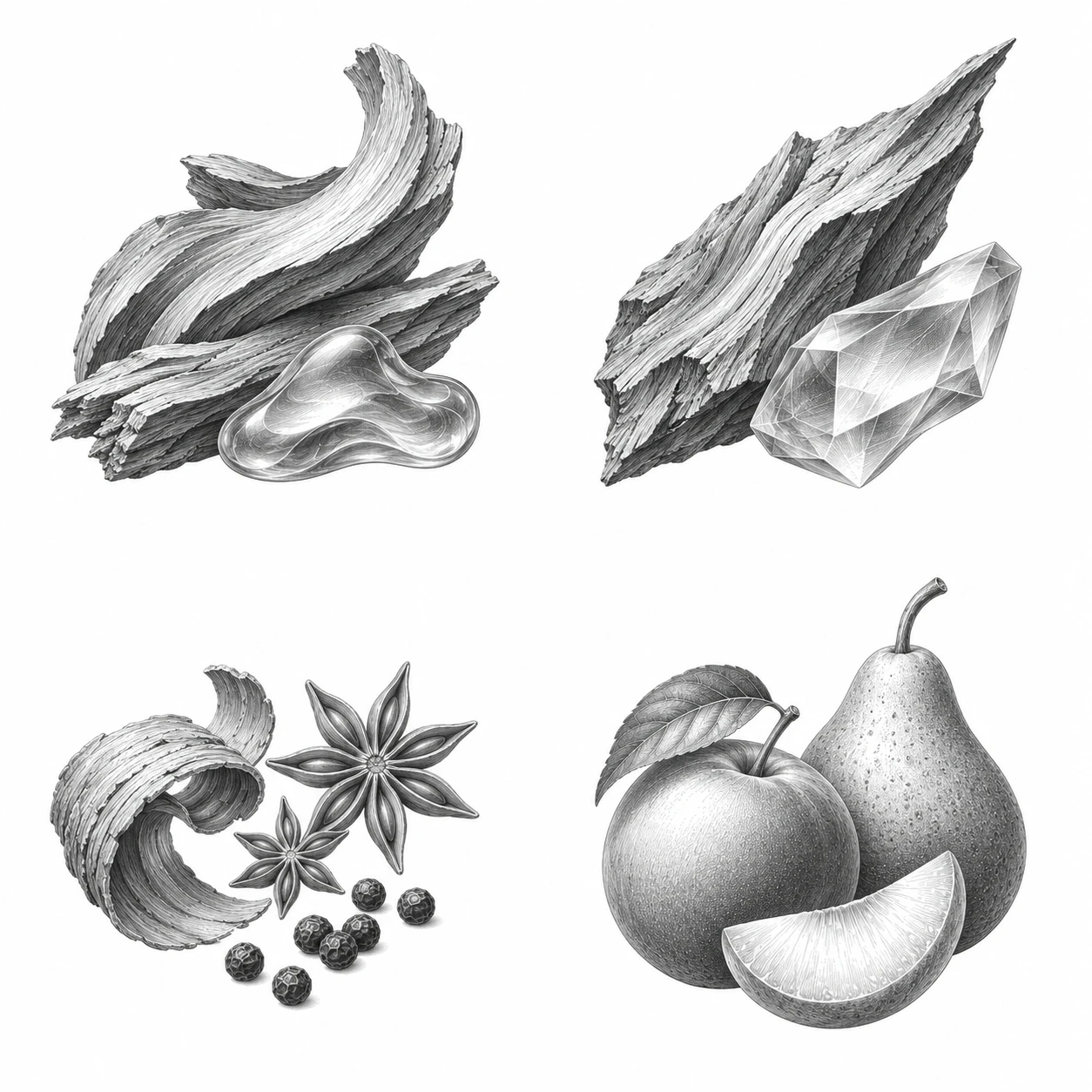
An accord is often a relationship between materials, rather than one item in a formula.
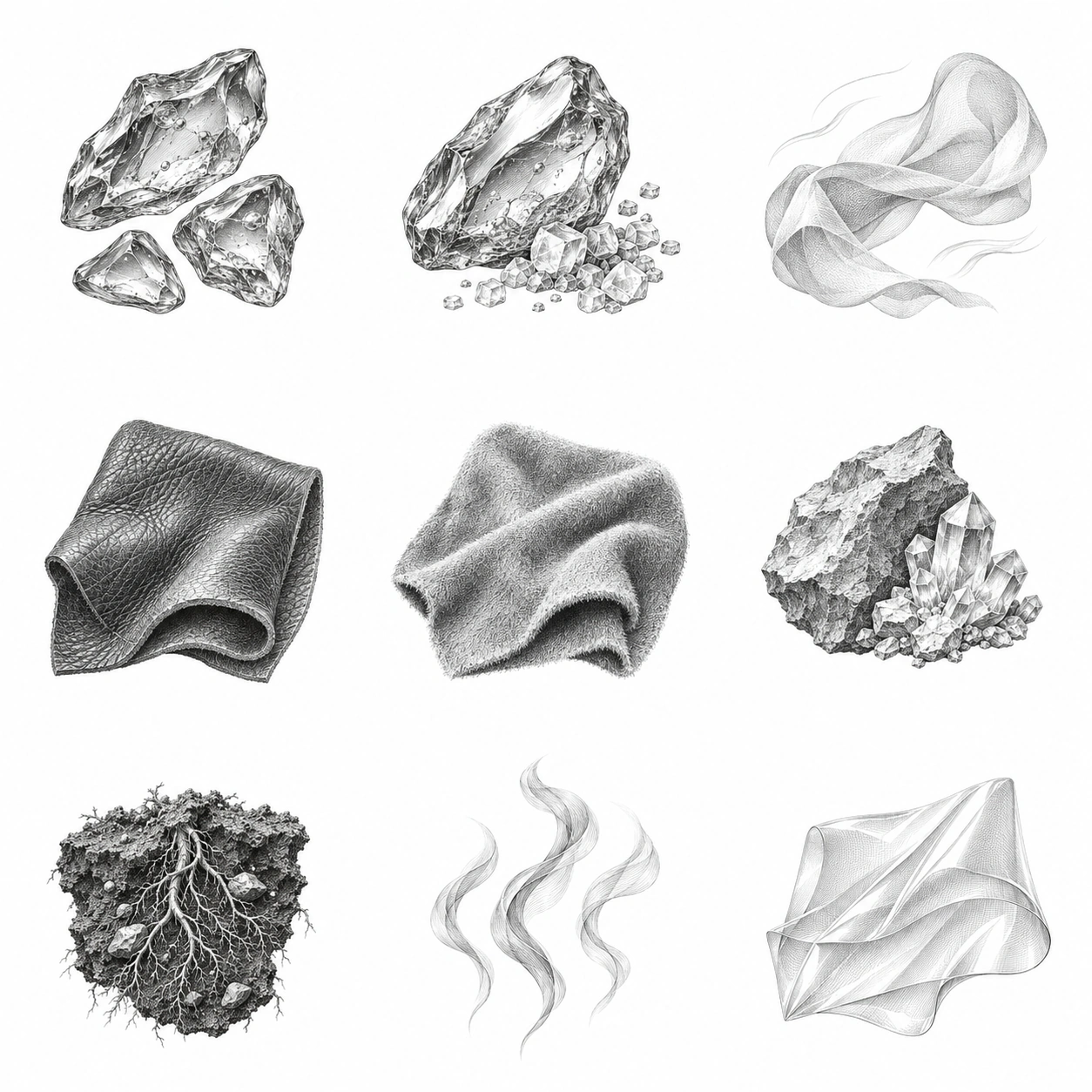
Published notes are an orientation tool, not a laboratory disclosure.
## Sources
- IFRA — about the fragrance transparency list:
- IFRA — questions about fragrance and formula disclosure:
- Tom Ford — Oud Wood official notes:
- Maison Francis Kurkdjian — Baccarat Rouge 540 official notes: