- Start with
- The direction around oud — spice, fruit, leather, resin or clean woods
- Do not assume
- Every perfume called oud will smell smoky, animalic or heavy
- Best next step
- Compare two contrasting compositions on blotter, then on skin
The word oud can make a perfume seem pre-decided: dark, smoky, expensive, too much. But it is one of the least useful words to shop by on its own. In a finished fragrance, oud may be a natural material, an accord, a reconstruction, or simply part of a larger idea. What matters for a wearer is the company it keeps.
Start by asking a more precise question: do you want oud to feel dry and tailored, resinous, leathery, fruity, spicy, or softened by sweetness? That single distinction makes a crowded category much easier to navigate.
First, choose an oud direction
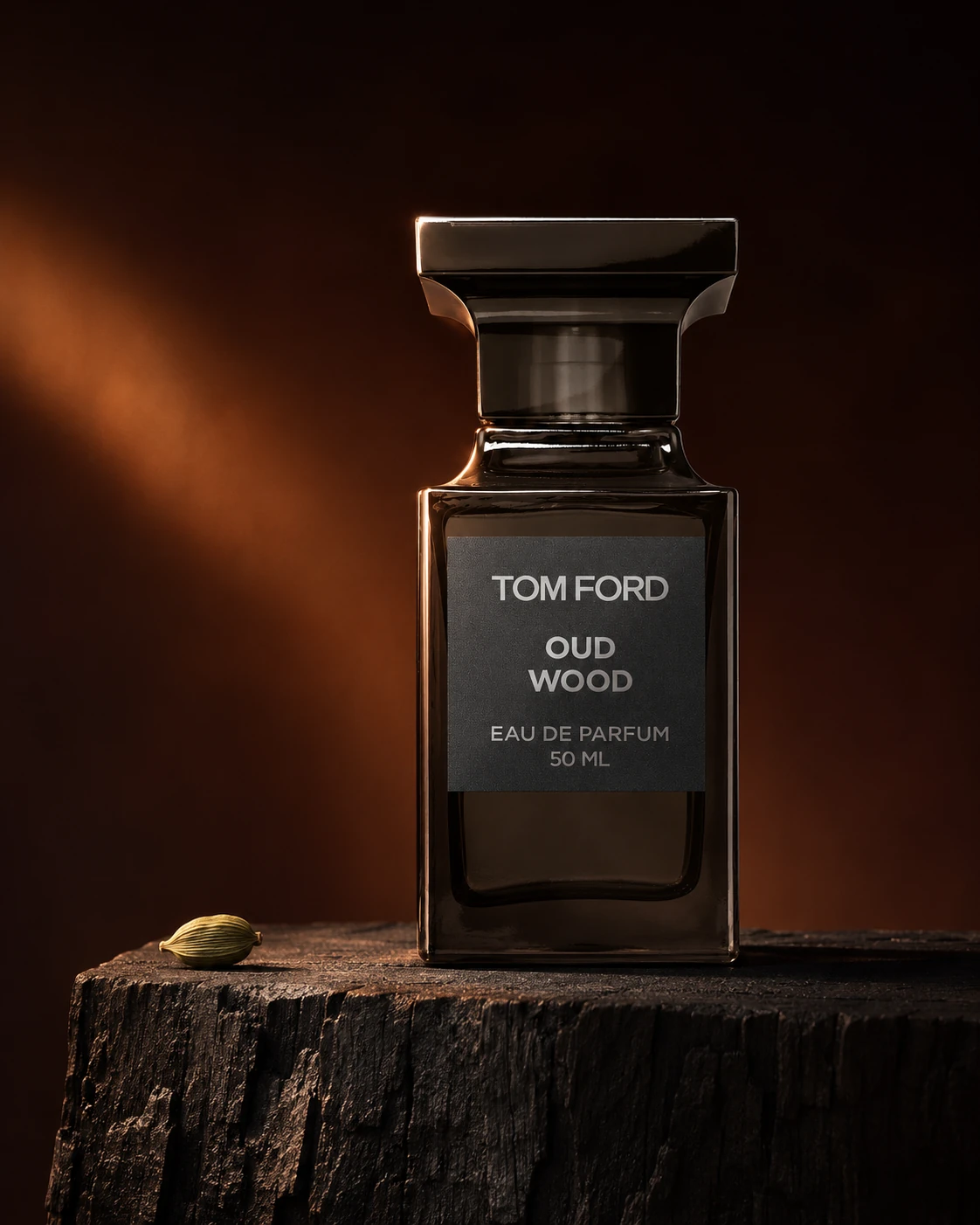
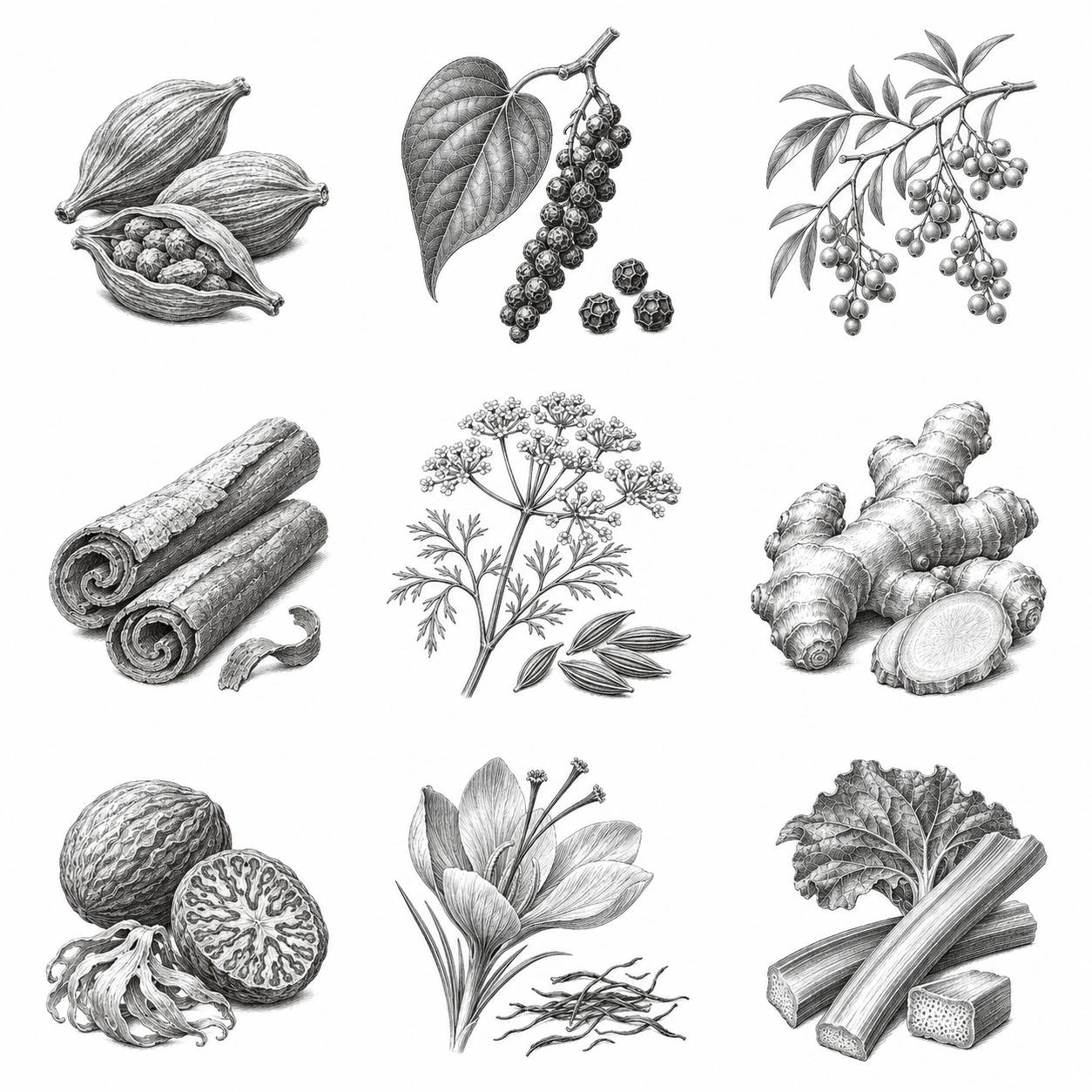
For a polished wood-and-spice route, begin with Tom Ford Oud Wood. Its published direction places cardamom, pink pepper, patchouli, amber and tonka around oud. The idea is not an isolated, barn-like oud note; it is a structured woody amber with spice at the edge. Our Oud Wood guide explains that shape in more detail.
For a more aromatic, incense-adjacent route, compare it with Byredo Oud Immortel. If you are drawn toward contrast and brightness, Maison Crivelli Oud Maracujá is a useful counterpoint: its name itself signals an encounter between oud and passion fruit. Initio Oud for Greatness moves in another direction again, built by the house around oud with aromatic spice and lavender.
Those are not interchangeable “best oud fragrances.” They are four different doors into the same word.
Learn the companions, not just the headline
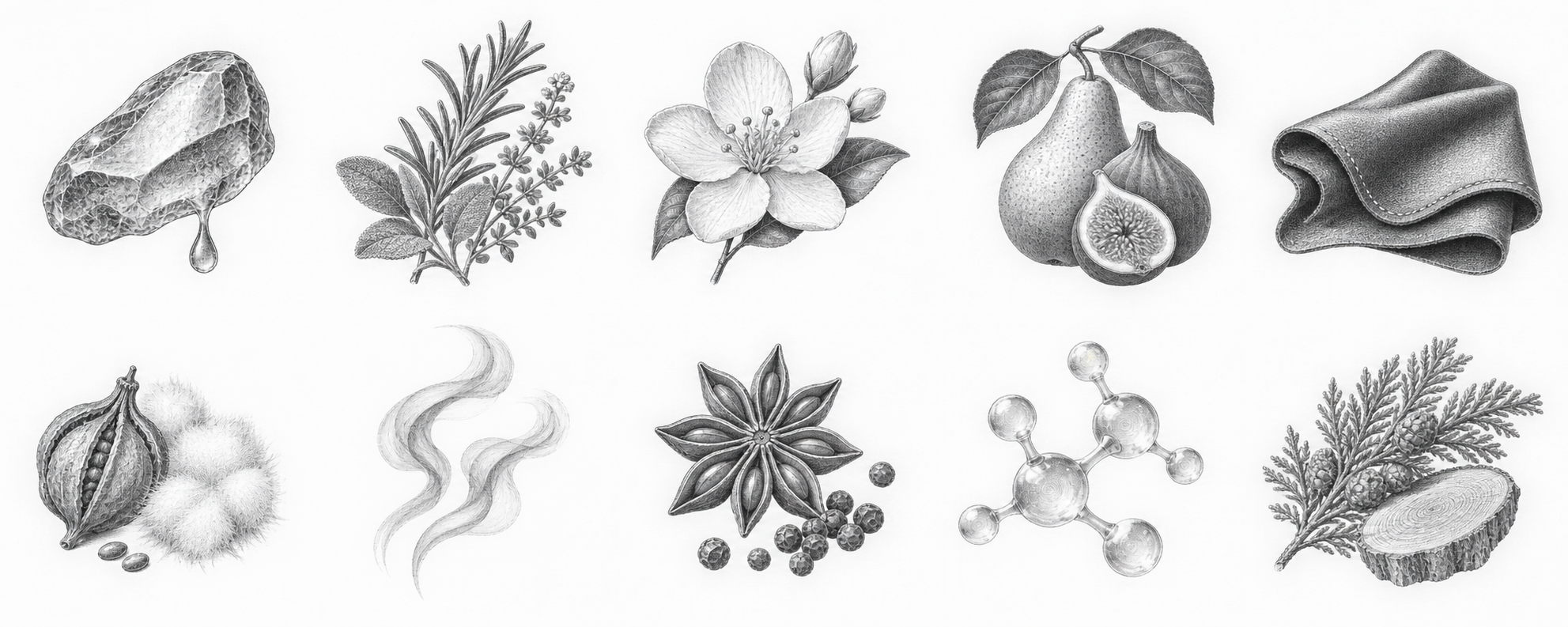
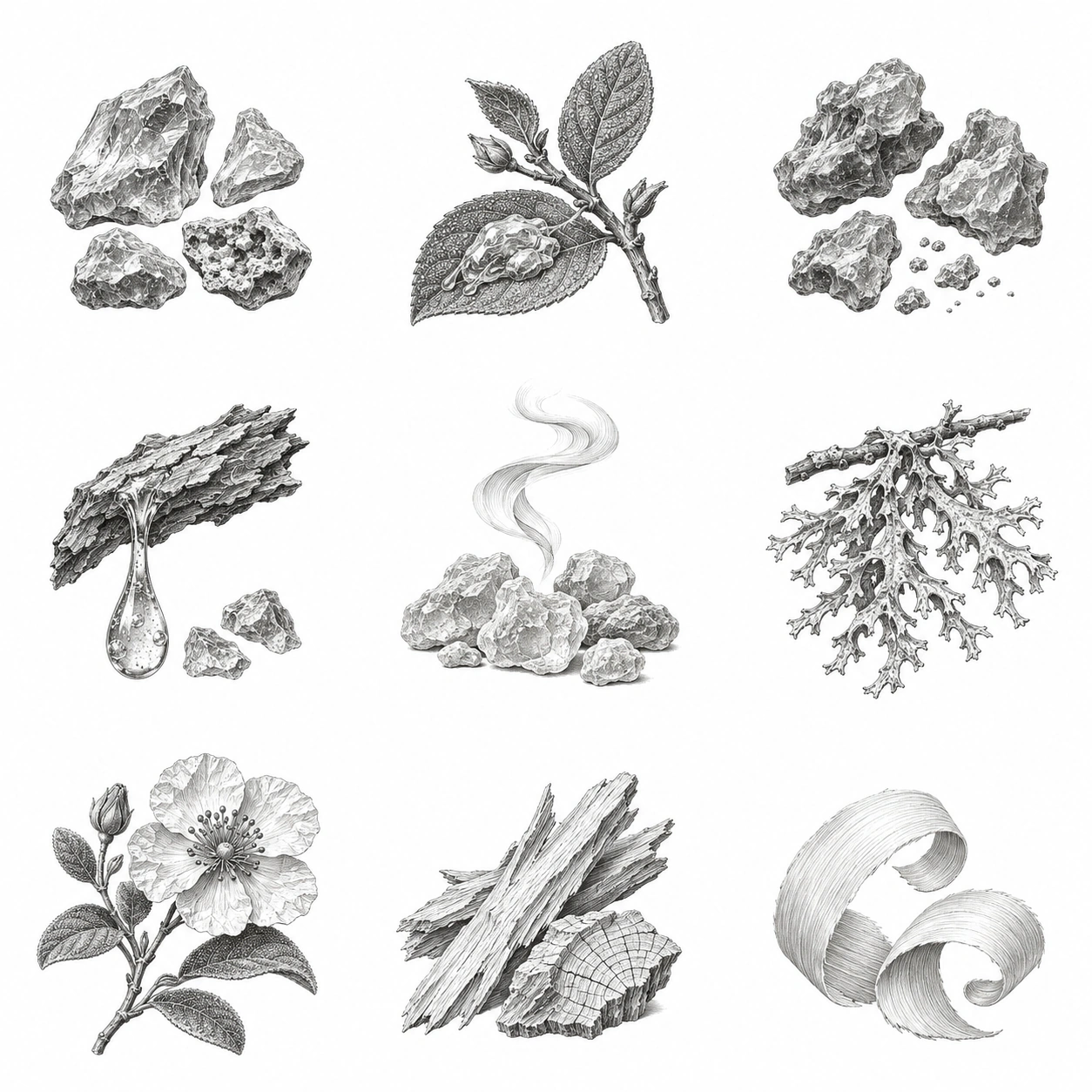
Look at the published notes around oud. Cardamom and pepper often suggest lift or dry spice. Rose can pull a composition toward petal, jam or dark floral territory. Leather can make it feel smoked, suede-like or animalic. Vanilla, tonka and amber can soften the edges; citrus or fruit can create a surprising contrast. Incense, patchouli and resins often point toward a deeper, more textural frame.
This does not let you predict a perfume perfectly. A note list is not a complete formula, and a note can behave very differently depending on its neighbours. But it gives you an intelligent shortlist. For the method, read how to read perfume notes.
Decide how much contrast you want
An oud perfume can be calm or theatrical. If your starting point is a quiet woody scent, seek an oud framed by cedar, cardamom, clean musks or soft amber. If you want more tension, try a fruit, rose, leather or incense contrast. If you already know that dense sweetness is not for you, move carefully around prominent vanilla, balsam and syrupy fruit descriptions — not because they are wrong, but because they may pull the composition away from what you wanted.
The most useful sample set contains two opposites, not four near-duplicates: one dry wood-and-spice scent and one fruit, leather or resin direction. Smell them on paper first, then live with one on skin at a time.
Test the exact edition
“Oud” does not settle the question of concentration, release or formula. Confirm the exact Eau de Parfum, extrait or other version before comparing online descriptions. Give each sample an unhurried wear, and notice what stays once you stop looking for the word oud itself: texture, temperature, sweetness, distance and mood are usually more revealing.
The goal is not to become an oud expert before you buy. It is to find the kind of dark wood you actually want close to you.
Sources & further reading
- Tom Ford — Oud Wood Eau de Parfum, official description and noteshttps://www.tomfordbeauty.com/products/oud-wood-eau-de-parfum
- Byredo — Oud Immortel, official description and noteshttps://www.byredo.com/ch_en/p/oud-immortel-eau-de-parfum
- Maison Crivelli — Oud Maracujá Extrait de Parfum, official product pagehttps://maisoncrivelli.com/en-us/products/oud-maracuja-extrait-de-parfum
- Initio — Oud for Greatness Eau de Parfum, official product pagehttps://us.initioparfums.com/products/oud-for-greatness

A life well considered.