- Start with
- Two fragrances only, applied separately and in small amounts
- Build through
- Contrast or a shared note, not a long list of similar perfumes
- Stop when
- You can no longer tell what each fragrance contributes
Layering is not a contest to create the most complicated scent. At its best, it is a small edit: one perfume gives the other a new edge, a little light, a little weight, or a different texture. At its worst, it becomes a cloud in which neither fragrance has a chance to be itself.
Start with two perfumes, not three. And test both alone before you try to combine them.
Choose one relationship
There are two dependable ways to begin.
Shared material: pair fragrances that meet around a note or family — tea and woods, rose and incense, vanilla and spice, clean musk and soft iris. The result can feel more continuous because each scent already speaks some of the other’s language.
Deliberate contrast: add brightness to warmth, dryness to sweetness, greenery to resin or clean skin musk to dark wood. Contrast is often more revealing than repetition, but it should be specific. A citrus or tea direction may give a warm amber some air; a dry wood may keep a sweet fruit from becoming too plush.
Start on different parts of the body
Apply one scent to one wrist and the other to the other wrist, or keep them on separate zones. This is not only a way to be cautious; it lets you understand the meeting as it happens. Spraying both directly on the same spot makes it difficult to learn which bottle created which effect.
Use less than you would when wearing a perfume alone. A small amount leaves enough room to decide whether the combination feels coherent after the opening disappears.
Let one scent lead
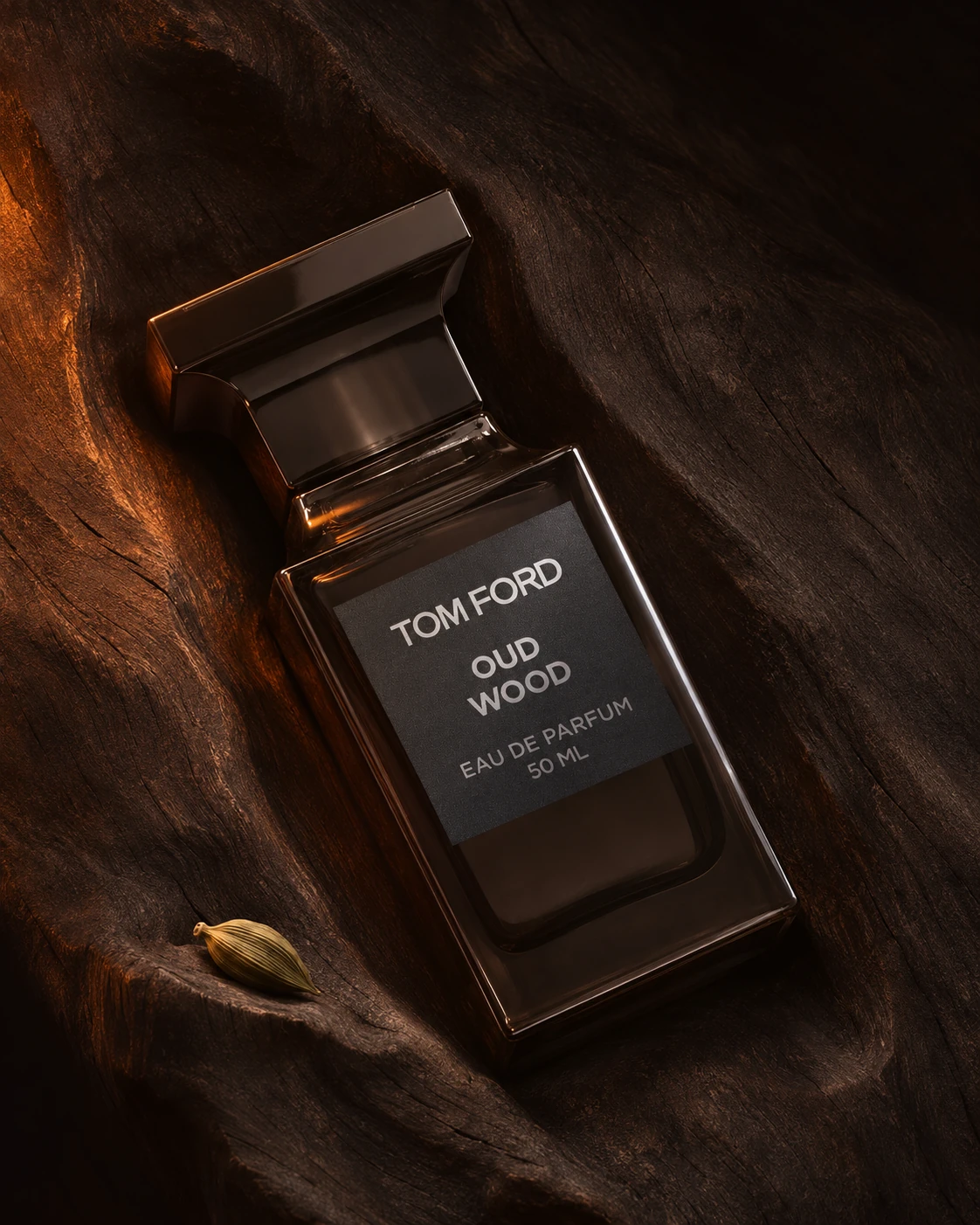
Choose the fragrance you want to remain recognizable. Then choose the other as a modifier. If Tom Ford Oud Wood is the centre, you might test whether a tea, citrus or soft-musk direction changes its dry wood-and-spice outline. The owner’s own Oud Wood layering guide is a focused starting point, not a prescribed formula.
If a green fig composition such as Diptyque Philosykos is the centre, ask whether the second scent adds warmth, not whether it simply adds more perfume.
Keep a one-line record
After each trial, write down the relationship: “tea made the wood feel drier,” “musk softened the spice,” or “both became too sweet.” This is more useful than a recipe because it teaches you your own preferences.
Stop when the two scents become indistinct. A successful layer still has air around it.
Sources & further reading
- Tom Ford — Oud Wood Eau de Parfum, official description and noteshttps://www.tomfordbeauty.com/products/oud-wood-eau-de-parfum
- Le Labo — THÉ NOIR 29 Eau de Parfum, official product descriptionhttps://www.lelabofragrances.com/the-noir-29-147.html
- Diptyque — Philosykos Eau de Parfum, official product descriptionhttps://www.diptyqueparis.com/en_us/p/philosykos-eau-de-parfum-75ml.html

A life well considered.