- A woody perfume can be
- Dry, creamy, earthy, mineral, smoky, green or soft
- Look for
- The specific wood and the notes placed around it
- Best comparison
- One cedar-led scent against one sandalwood or vetiver-led scent
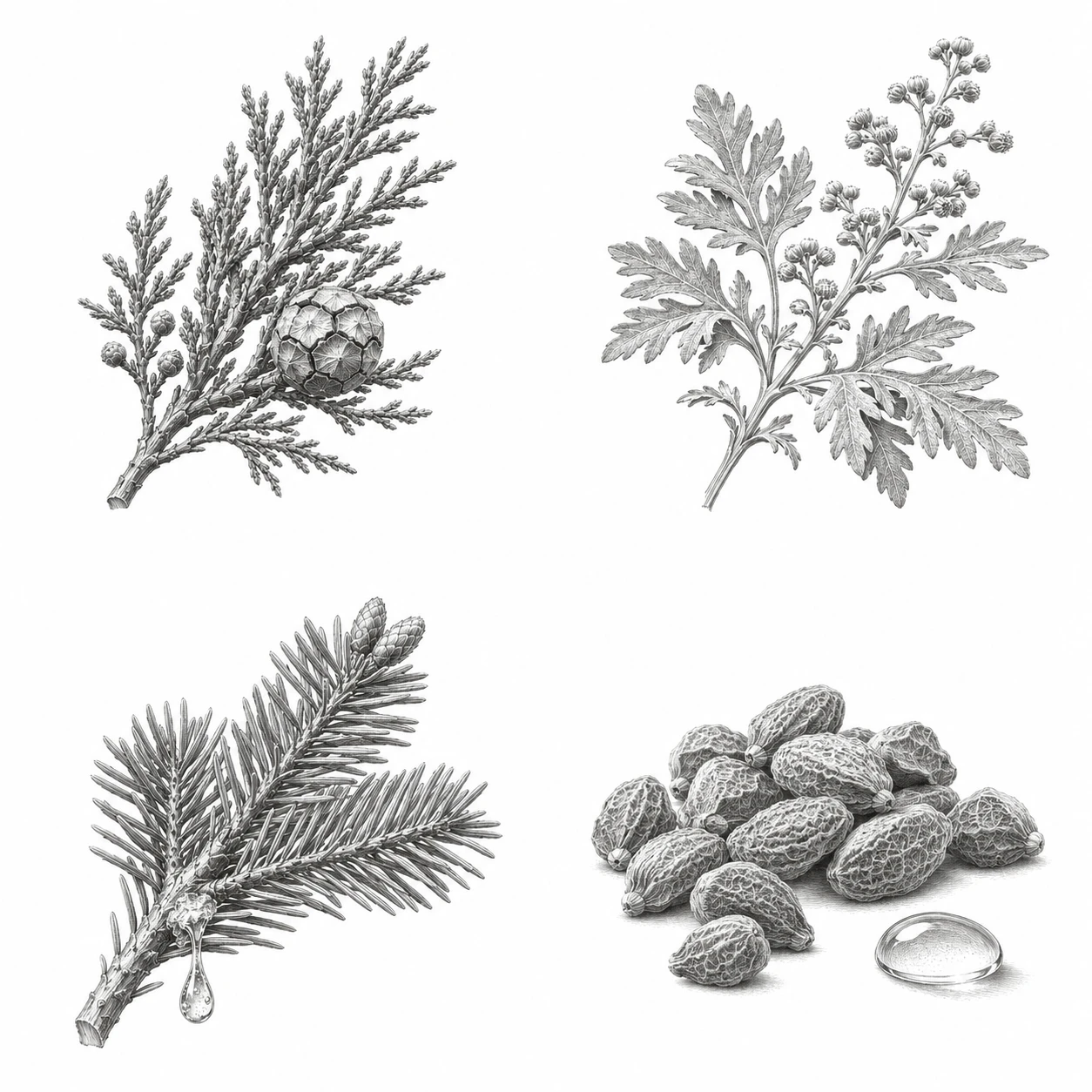
“Woody” is often used as if it were a finished answer. It is not. A perfume can be woody in the dry pencil-shaving sense of cedar, the milky softness associated with sandalwood, the rooty bitterness of vetiver, or the darker warmth of resins and oud. The right woody fragrance begins with a texture, not a gender, season or price point.
Start with the wood you mean
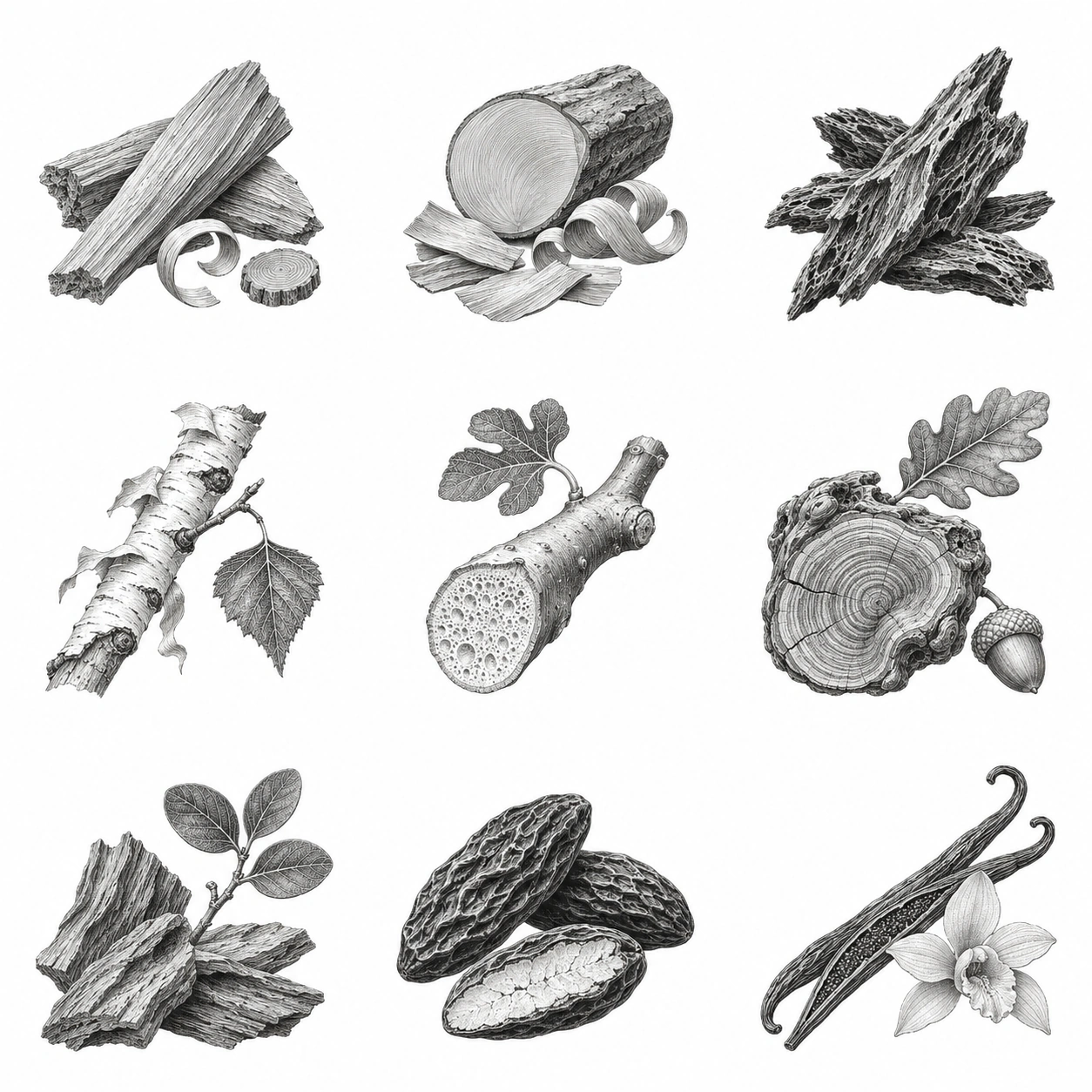
Cedar often suggests a dry, clean, pencil-like or architectural effect. Byredo Super Cedar is a useful reference point because the house places cedar at the centre of its published story. Sandalwood can be smoother, warmer and more tactile; Le Labo Santal 33 is one well-known way into that conversation, although the full effect is more than a single wood note.
Vetiver has roots, grass, smoke, citrus and mineral facets depending on the treatment. In a woody composition it can make the whole thing feel drier or more vertical. Oud may bring depth, resin, leather or a polished shadow; start with our oud fragrance guide if that is the wood you are curious about.
The names are not rigid sensory laws. They are useful first clues.
Read the notes around the wood
The supporting notes tell you where a woody perfume is likely to travel. Bergamot, tea, herbs or airy musks can make woods feel brighter and more transparent. Cardamom, pepper and incense add aromatic or smoky tension. Vanilla, tonka and balsams can make them rounder or more enveloping. Fig, rose or fruit can move the composition away from a literal forest image entirely.
Essential Parfums Bois Impérial gives you a modern, aromatic woody point of comparison, while Tom Ford Oud Wood is a warmer wood-and-spice construction. Put those two ideas side by side and the category becomes much more specific than “I like woody scents.”
Choose your preferred temperature
Try this simple edit before sampling:
- Cool and clean: cedar, vetiver, tea, citrus, mineral or sheer musk.
- Soft and tactile: sandalwood, iris, ambrette, tonka or creamy woods.
- Warm and shadowed: oud, incense, amber, patchouli, resins or leather.
- Green and outdoorsy: fig leaf, moss, herbs, pine-like materials or rooty vetiver.
None of these tells you how far a perfume will travel or how long it will last. They tell you what kind of place the composition is trying to make.
Sample two, not ten
Choose one wood at either end of your preference. If you usually wear fresh citrus, start with an aromatic cedar or vetiver. If you enjoy amber and spice, test a darker wood or oud. Smell on blotter, then give one fragrance a complete skin test without layering it with something else.
The best woody perfume is not the one that says “wood” most loudly. It is the one whose grain, light and temperature you want to return to.
Sources & further reading
- Le Labo — Santal 33 Eau de Parfum, official product pagehttps://www.lelabofragrances.com/santal-33-147.html
- Essential Parfums — Bois Impérial, official product pagehttps://www.essentialparfums.com/en/products/bois-imperial
- Byredo — Super Cedar Eau de Parfum, official product pagehttps://www.byredo.com/us_en/p/super-cedar-eau-de-parfum?sku=0065205627
- Tom Ford — Oud Wood Eau de Parfum, official description and noteshttps://www.tomfordbeauty.com/products/oud-wood-eau-de-parfum

A life well considered.